
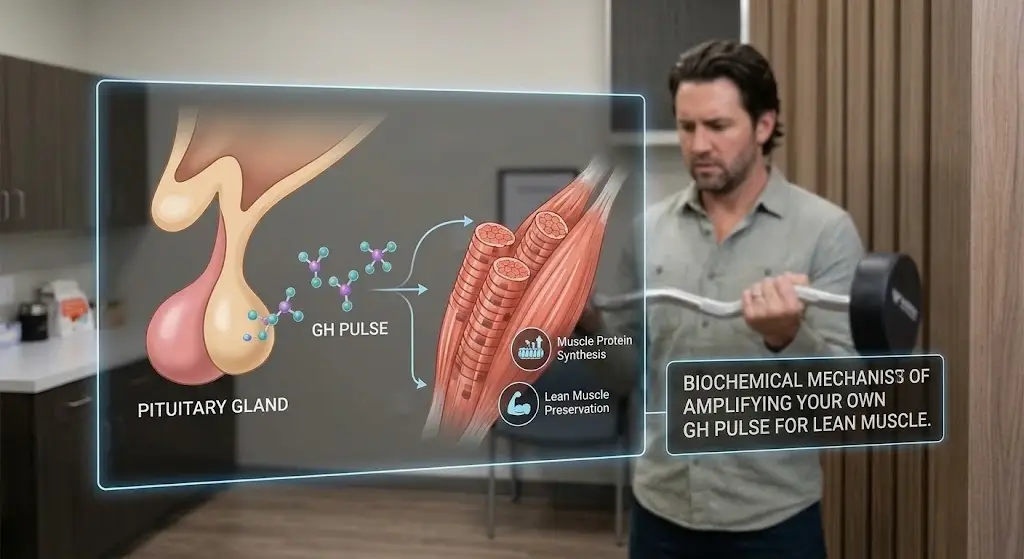
If you’ve hit a plateau in the gym despite consistent training and solid nutrition, you’ve probably come across peptide therapy as a potential piece of the puzzle. Peptides can genuinely support muscle growth, but the honest picture is more specific than “take this and grow,” and understanding which peptides actually target muscle-building pathways, and how, matters more than chasing the most-hyped compound online.
Key Takeaways
- Most muscle-relevant peptides (Sermorelin, CJC-1295, Ipamorelin) work by stimulating your own growth hormone release, not by directly building tissue themselves.
- BPC-157 doesn’t build muscle directly; it supports faster recovery, which allows more consistent training volume over time.
- Peptides only amplify a process your body already runs, so they won’t produce meaningful results without consistent resistance training and adequate protein intake.
How Peptides Actually Support Muscle Growth
Most muscle-relevant peptides work by stimulating your body’s own growth hormone release rather than directly building tissue themselves. Growth hormone supports protein synthesis, helps preserve lean muscle during periods of fat loss, and plays a role in recovery between training sessions. The peptides that support this pathway are essentially amplifying a process your body already runs, rather than introducing an entirely foreign muscle-building mechanism.
Growth Hormone Releasing Peptides
Sermorelin and the combination of CJC-1295 and Ipamorelin are the most commonly used peptides for this purpose. They signal your pituitary gland to release your body’s own growth hormone, supporting lean muscle preservation, improved recovery, and better sleep quality, which itself plays a significant role in muscle repair and growth. These are generally considered a foundational option for men focused on body composition over time rather than a fast, dramatic transformation.
BPC-157 for Recovery-Driven Growth
BPC-157 doesn’t directly build muscle mass, but it plays an important supporting role by accelerating recovery from the actual tissue damage training creates. Faster, more complete recovery between sessions means more consistent training volume over time, which is one of the primary drivers of long-term muscle growth. Many active men use it specifically to recover from minor injuries or overuse issues that would otherwise interrupt their training consistency.
Why “Muscle Growth Peptides” Marketing Oversimplifies Things
A lot of online content markets peptides as a direct shortcut to muscle growth, implying you can add a compound and expect substantial results independent of your training and nutrition. This isn’t how these peptides actually work. They support and amplify your body’s existing capacity to build and repair muscle. Without consistent resistance training and adequate protein intake, no peptide protocol will produce meaningful muscle growth on its own.
What a Responsible Approach Actually Looks Like
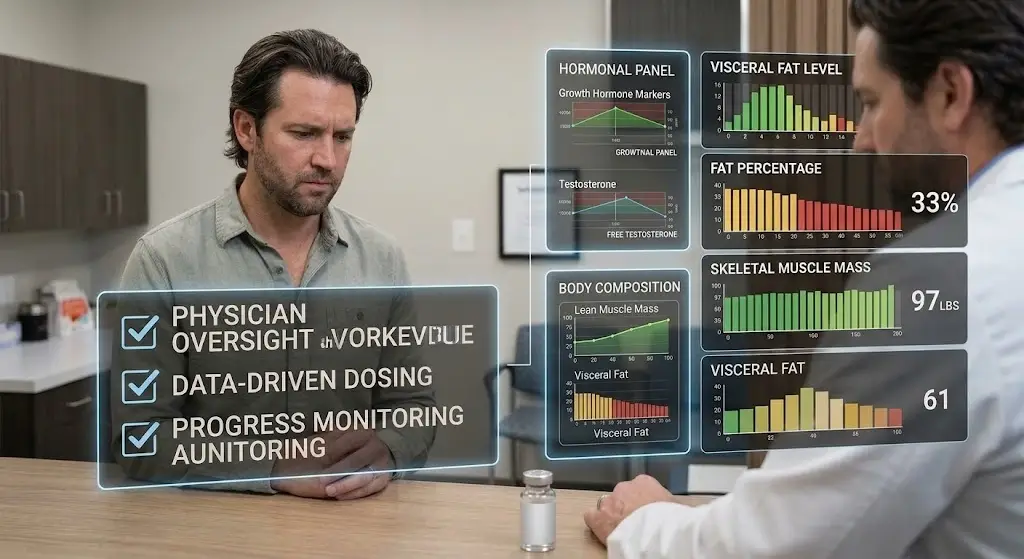
The most effective use of peptides for muscle-related goals starts with bloodwork, not a general protocol applied to every man who walks in the door. Confirming your actual hormone levels, including growth hormone-related markers where relevant, helps determine whether you’re a good candidate and which specific peptide, or combination, actually addresses what’s limiting your progress. For some men, the real limiter isn’t peptides at all; it’s an undiagnosed testosterone deficiency, inadequate recovery time, or a training program that needs adjustment.
Safety Matters More Than Speed
Because peptides affect real hormonal pathways, self-directed use without medical oversight carries real risk, including improper dosing and interactions with other health conditions. A physician-supervised protocol includes an actual evaluation, a specific plan based on your bloodwork and goals, and ongoing monitoring to adjust your protocol as you respond, rather than a generic stack purchased online with no oversight at all.
Frequently Asked Questions
Which peptide is best for muscle growth?
There’s no single “best” option. Sermorelin, CJC-1295, and Ipamorelin support growth hormone release and lean muscle preservation, while BPC-157 supports recovery that indirectly enables more consistent training. The right choice depends on your specific goals and bloodwork.
Do peptides work without exercise?
No. Peptides support and amplify your body’s existing capacity to build and repair muscle. Meaningful results still require consistent resistance training and adequate nutrition.
How long before I notice results?
Timelines vary by peptide and individual response. Recovery-focused options like BPC-157 may show effects within a few weeks, while growth hormone releasing options often take four to eight weeks to show noticeable changes.
Are peptides safe for these goals?
When prescribed and monitored by a physician based on real bloodwork, peptides have a strong safety profile. Self-directed use without medical oversight carries meaningfully higher risk.
Could something other than peptides be limiting my progress?
Possibly. Undiagnosed low testosterone, inadequate recovery, or training program issues are common, overlooked reasons for a plateau that peptides alone won’t fix. A real evaluation helps identify what’s actually limiting your results.
Build a Protocol Based on Your Actual Goals
At Maverick Men’s Health in Fayetteville, AR, every peptide protocol starts with real lab work and a conversation about what’s actually limiting your progress, not a generic stack. If muscle growth and recovery are your focus, we’ll help you find the approach that fits your specific situation.
Visit: 1420 E Augustine Ln #7, Fayetteville, AR 72703