
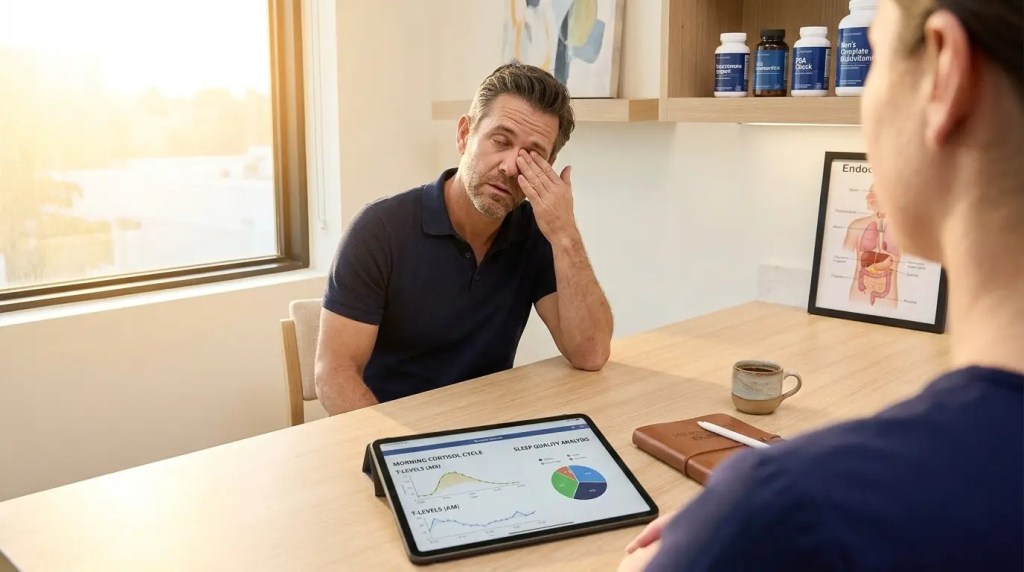
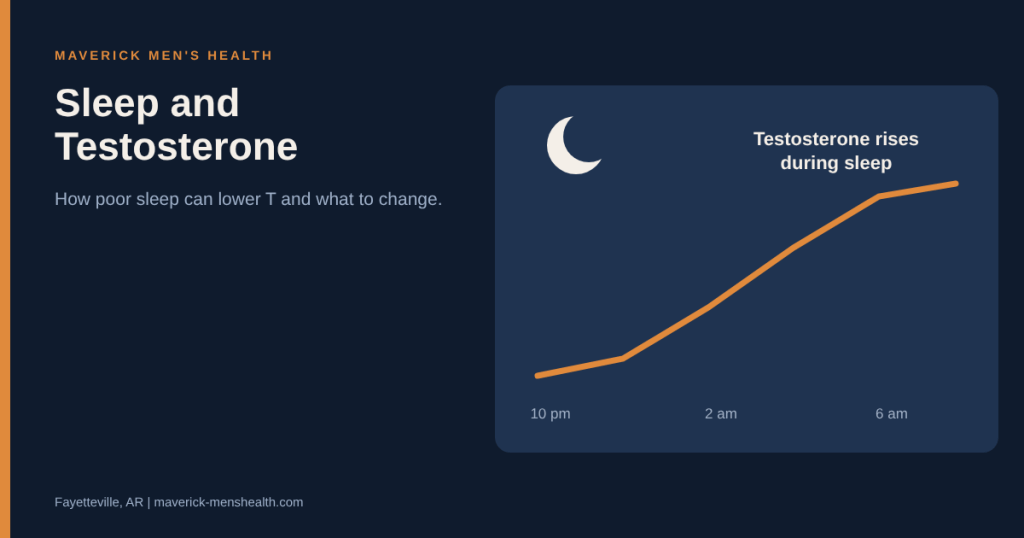
How does sleep affect testosterone? Testosterone rises during sleep, so short or broken sleep can lower it. In one well-known study, healthy young men who slept under five hours a night for one week had testosterone levels about 10 to 15 percent lower. Better sleep may help restore levels, but if symptoms continue, labs can show whether something else is going on.
If you feel tired, flat or less driven, the link between sleep and testosterone is one of the first places to look. It runs both ways: poor sleep can lower testosterone, and low testosterone can make sleep worse.
At our men’s health clinic in Fayetteville, we see men who have tried to fix fatigue on their own for months. This guide explains how sleep and testosterone interact, what to change and when it is time for labs.
How Sleep and Testosterone Are Connected
Testosterone follows a daily rhythm. Levels rise during sleep, particularly as you move through deeper sleep stages and into REM, and they peak in the early morning. When sleep is cut short or fragmented, that overnight rise gets interrupted.
Researchers at the University of Chicago tested this directly. In a study of 10 healthy men with an average age near 24, one week of sleeping fewer than five hours a night lowered daytime testosterone by roughly 10 to 15 percent. You can read a summary of the sleep restriction study, which was published in JAMA.
The study was small and short, so it shows a clear signal, not a final answer for every man.
How Much Sleep Do Men Need for Healthy Testosterone?
Most adults do best with seven to nine hours a night. Research on sleep and testosterone suggests the biggest declines show up when sleep falls well below that range for several nights in a row. Consistency matters as much as the total, so a regular bedtime and wake time help.
| Sleep pattern | Possible effect on testosterone |
| 7 to 9 hours, regular schedule | Supports normal daily rhythm |
| Under 5 to 6 hours for days or weeks | May lower testosterone and energy |
| Fragmented sleep (frequent waking) | May blunt the overnight rise |
| Untreated sleep apnea | Often linked with low testosterone and poor sleep quality |
| Shift work or irregular hours | Can disrupt the rhythm |
Symptoms of Poor Sleep vs Low Testosterone
The overlap is the problem. Both can cause:
- Fatigue and low energy
- Low mood or irritability
- Brain fog and poor focus
- Lower sex drive and weaker erections
- Slower recovery from workouts
- Belly fat gain
Because the signs look alike, you cannot sort out sleep and testosterone problems by symptoms alone. Our guide to low testosterone symptoms men ignore lists the signs to watch, and our article on low libido in men covers the drive side.
Sleep and Testosterone Work Both Ways
The relationship is a loop. Men with low testosterone sometimes report lighter, less restful sleep, and low energy during the day can lead to less activity and worse nights. Extra body fat can raise the risk of sleep apnea, which interrupts breathing and sleep, and apnea has been associated with lower testosterone. Our article on low testosterone and belly fat explains part of that cycle.
Sleep and Testosterone: The Sleep Apnea Factor
Loud snoring, gasping at night, waking unrefreshed and morning headaches can point to sleep apnea. It is common in men and often goes undiagnosed. If this sounds like you, a medical provider can guide you toward a sleep study. Treating apnea may improve sleep quality and energy, and it can be an important step before judging your testosterone.
8 Habits That Support Sleep and Testosterone
- Keep a steady schedule. Same bedtime and wake time, even on weekends.
- Protect your sleep window. Aim for at least seven hours in bed.
- Limit late caffeine. Cut it off by early afternoon if you are sensitive.
- Go easy on alcohol. It may help you fall asleep but disrupts deeper sleep.
- Dim screens before bed. Bright light late at night can delay sleep.
- Keep the bedroom cool, dark and quiet.
- Exercise regularly, but finish hard workouts a few hours before bed.
- Manage stress. High stress and sleep problems feed each other.
These habits will not fix every case of low testosterone, but they are a sensible first step. For a wider look at lifestyle changes versus medical care, see our comparison of TRT vs natural boosters.
When Should You Get Labs?
Consider testing if you have symptoms for more than a few weeks despite better sleep, or if your sleep is fine and you still feel off. A proper evaluation looks at morning total and free testosterone, and often repeats the test, because levels vary. It may also include thyroid, blood sugar and vitamin markers that mimic low T.
Our guide to men’s health blood work explains what is usually checked, and our article on normal testosterone levels by age helps you read your numbers. If you are considering treatment, our low testosterone page explains what to expect.
What to Expect at Maverick Men’s Health
- Visit one: blood draw and labs. We check hormones and the related markers that affect energy and sleep.
- Visit two: your results consultation. A medical provider reviews your results and your sleep and lifestyle history, then explains what may be driving how you feel and what your options are. Our care is led by Dr. Gentry and delivered by licensed, credentialed medical providers.
There is no obligation and no pressure. We offer affordable pricing options, so call for details. Financing is available through Cherry and CareCredit.
Frequently Asked Questions
Does lack of sleep lower testosterone?
It can. In a small study, healthy young men who slept under five hours a night for a week had testosterone levels roughly 10 to 15 percent lower.
How many hours of sleep do I need for healthy testosterone?
Most adults do best with seven to nine hours. Regular timing matters along with total hours.
Can sleeping more raise testosterone?
If you are sleep deprived, getting enough rest may help levels recover. It will not raise testosterone above your normal range if sleep was not the problem.
Does low testosterone cause insomnia?
It may contribute to lighter or poorer sleep in some men, though many other factors play a role, including stress, apnea and medications.
Is sleep apnea linked to low testosterone?
Yes, they are often found together. Obesity, poor sleep and hormones can feed each other, so a provider may evaluate both.
What time is testosterone highest?
Levels are usually highest in the early morning, which is why blood tests are typically done in the morning.
Can I fix low testosterone with sleep alone?
Sometimes, if poor sleep is the main cause. If symptoms persist, labs help show whether further evaluation or treatment makes sense.
When should I see a provider about low energy?
If fatigue, low drive or mood changes last more than a few weeks, or come with loud snoring or daytime sleepiness, get evaluated.
Sort Out Sleep and Testosterone in Fayetteville
Maverick Men’s Health helps men in Fayetteville and across Northwest Arkansas, including Springdale, Rogers, Bentonville and Siloam Springs, find out whether their fatigue is about sleep, hormones or both. Start with labs and a conversation, and decide with real data.
Request a Consultation Call: (479) 305-8206 Visit: 1420 E Augustine Ln #7, Fayetteville, AR 72703